Best Bet for NBA UK: Top Odds and Sportsbook Reviews
 Available in US
Table of Contents
- Evaluating Top NBA Betting Markets and Sportsbooks
- Understanding NBA Betting Fundamentals
- Best Types of NBA Bets for Different Bettors
- How to Find the Best NBA Bets Today
- The half-point that pays the rent
- Key Factors for NBA Betting Analysis
- NBA Betting Strategies That Work
- Parlays and Same Game Parlays
- NBA Futures Betting
- Tools and Resources for NBA Bettors
- FAQ
- Conclusion

Evaluating Top NBA Betting Markets and Sportsbooks
The NBA betting market moves faster than a Steph Curry release. Every night during the season, bettors face a wall of odds, spreads, and prop lines across dozens of games. Some throw darts at the board and hope for the best. Others treat it like a science project, drowning in spreadsheets until tip-off. Neither approach works consistently.
Finding the best bet for NBA games sits somewhere between art and arithmetic. The league’s high-scoring nature, star-driven outcomes, and grueling 82-game schedule create inefficiencies that sharper bettors exploit night after night. But exploiting those inefficiencies requires understanding how the betting market actually works, not just following a hot tipster on social media.
This guide breaks down everything you need to make smarter NBA wagers in 2026. You will learn how odds work, which bet types suit your style, what factors actually move the needle on outcomes, and how to spot value when the market misprices a game. Whether you prefer simple moneylines or complex same-game parlays, the principles remain the same: information, discipline, and patience beat gut feelings every time.
The NBA offers more betting opportunities than any other major sport. Eighty-two regular season games per team, plus playoffs, plus player props, plus live betting creates an almost overwhelming menu. That volume is both an advantage and a trap. More games mean more chances to find value, but also more chances to burn through your bankroll chasing bad bets. This guide will help you distinguish between the two.
Understanding NBA Betting Fundamentals
How NBA Odds Work
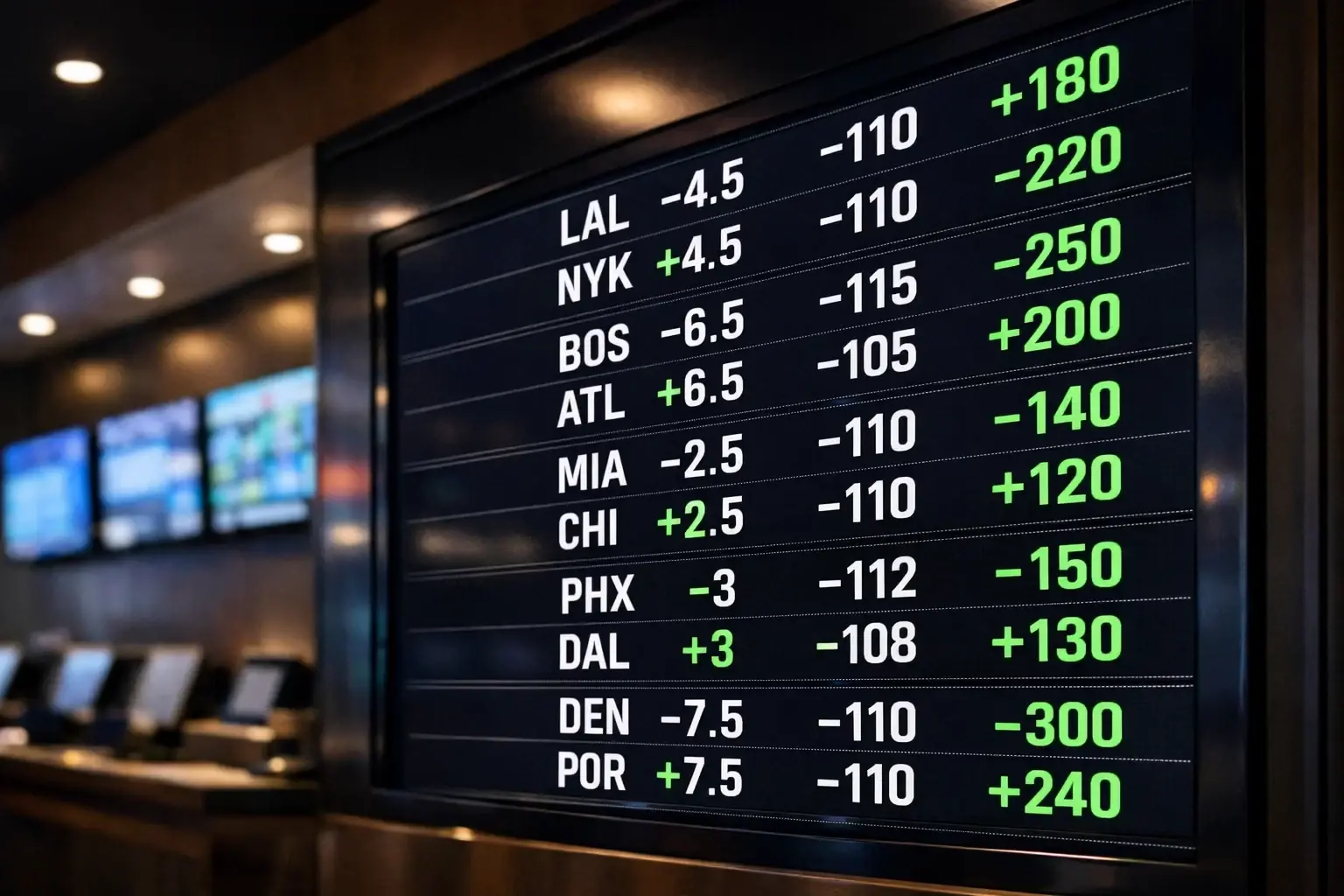
American odds dominate the NBA betting landscape. These numbers tell you two things: how much you risk to win a certain amount, or how much you win on a certain risk. A negative number like -150 means you must wager $150 to profit $100. A positive number like +130 means a $100 bet returns $130 in profit. The concept seems simple enough until you realize these numbers also encode probability.
Sportsbooks build their edge into the odds through a margin called vigorish, or juice. On a standard point spread, you might see both sides at -110. This means both bettors risk $110 to win $100. The $10 difference on each side represents the sportsbook’s profit margin. Over thousands of bets, that margin ensures the house stays in business. Your job as a bettor is to overcome that built-in disadvantage by finding spots where the true probability differs from what the odds suggest.
Converting odds to implied probability helps you understand what the sportsbook thinks will happen. For negative odds, divide the absolute value by itself plus 100. A -150 favorite implies a 60% win probability. For positive odds, divide 100 by the odds plus 100. A +130 underdog implies about 43.5% probability. When your analysis suggests a higher probability than the odds imply, you have found potential value.
Reading Betting Lines
Every NBA game produces multiple betting lines. The moneyline simply asks who wins the game, with odds reflecting each team’s perceived chances. The point spread levels the playing field by assigning a handicap; a -6.5 favorite must win by 7 or more points to cover, while a +6.5 underdog can lose by 6 points and still win the bet. The total, or over/under, sets a combined score for both teams that you bet above or below.
Lines open early, sometimes 24 to 48 hours before tip-off, and move based on betting action and new information. Sharp bettors who consistently win tend to bet early, so significant early movement often signals where the smart money sits. Late movement, especially close to game time, usually reflects injury news, lineup changes, or public money piling on one side. Understanding why a line moves matters as much as knowing where it currently sits.
The spread and total interact in ways that reveal market expectations. A game with a tight spread and high total suggests an expected shootout between evenly matched teams. A large spread with a lower total indicates a potential blowout where the leading team coasts and the trailing team struggles to score. These context clues help you understand not just who will win, but how the game might play out.
Key Betting Terms
The betting lexicon includes several terms you must master. The juice or vig refers to the commission built into odds, typically around 10% on standard bets. A push occurs when the result lands exactly on the spread or total, returning your original stake with no profit or loss. Against the spread, abbreviated ATS, refers to point spread betting specifically. Cover means a team beat the spread, regardless of whether they won the actual game.
Handle represents the total amount wagered on a game or event. Public money refers to bets from recreational bettors who tend to favor favorites and overs. Sharp money comes from professional bettors whose action sportsbooks respect and often follow. Closing line value, or CLV, measures whether you beat the final line; consistently getting better numbers than closing odds correlates strongly with long-term profitability.
Best Types of NBA Bets for Different Bettors
Moneyline Betting
The moneyline represents the purest form of sports betting: pick the winner, cash the ticket. No spreads, no point margins, just outcomes. This simplicity makes moneylines attractive for beginners who want to learn the market without tracking complex numbers. Favorites carry negative odds reflecting their higher win probability, while underdogs offer positive odds with bigger potential payouts.
NBA moneylines make the most sense in specific situations. Games between closely matched teams often feature reasonable juice on both sides, offering decent value without extreme risk. Playoff games amplify this dynamic because star players perform at higher levels and random variance decreases over a seven-game series. Regular season mismatches where heavy favorites sit at -400 or worse rarely offer value on the moneyline; you are risking $400 to win $100 on a game where anything can happen.
The strategic value of moneylines emerges when combined with other approaches. Parlay builders often anchor their cards with a moneyline favorite they feel extremely confident about. Live bettors watch for momentum swings that push moneyline odds to more favorable positions. Moneylines also serve as a hedge mechanism when you hold a spread bet on the underdog and the game gets close late.
Point Spread Betting
Spread betting dominates NBA action for good reason. The handicap system creates roughly 50/50 propositions on most games, which means oddsmakers must work harder to set accurate lines. That difficulty creates opportunities for bettors who do their homework. When you bet a spread, you are not predicting who wins; you are predicting the margin.
Key numbers matter differently in basketball than football. The NBA has no equivalent to football’s touchdown or field goal. Games frequently land on margins of 3, 4, 5, or 6 points, but no single number dominates. What matters more is understanding how certain teams behave against spreads. Some franchises consistently cover at home but struggle on the road. Others perform better as underdogs when the public dismisses them.
Spread betting rewards deep knowledge of team tendencies and situational factors. A team playing its fourth road game in five nights against a well-rested opponent will struggle to cover almost any number. A squad returning home after a long trip often exceeds expectations as the crowd and familiar surroundings provide a boost. These patterns repeat across seasons and create reliable betting angles for those paying attention.

Over/Under Totals
Totals betting asks a different question entirely: how will the game unfold? You are not concerned with which team wins or by how much. You care only about combined scoring. This shift in focus opens up analytical approaches that spread and moneyline bettors often overlook.
Pace drives totals more than any other factor. Teams that push the tempo generate more possessions, which means more shot attempts and more points for both sides. A game between two up-tempo squads like the Sacramento Kings hosting the Indiana Pacers will almost certainly see more total points than a defensive grind between Miami and Memphis. Checking pace statistics and recent scoring trends before betting totals separates informed bettors from guessers.
Totals also reflect weather conditions indoors, namely rest and travel. Tired teams tend to play worse defense, which counterintuitively can push totals higher. However, their offensive efficiency also drops, potentially keeping scoring down. The interaction between offensive and defensive fatigue creates complexity that simple systems cannot capture. You need to evaluate both sides of the ball for both teams when projecting total points.
Player Props
Prop bets shift focus from team outcomes to individual performances. Points scored, rebounds grabbed, assists dished, three-pointers made, and combinations like points-rebounds-assists all offer betting markets most nights. Props attract bettors who know specific players deeply and can identify when sportsbooks misprice their expected output.
The key to prop betting lies in understanding role and usage. A player averaging 15 points per game might see that line set around 14.5, but context matters enormously. Is the opposing team missing their best perimeter defender? Is a teammate injured, shifting more offensive responsibility? Has the player exceeded this number in eight of his last ten games? Props reward granular research that general market bettors skip.
Same-game parlays often build around player props combined with game outcomes. Betting that LeBron James scores over 25 points and the Lakers cover a moderate spread creates a correlated parlay where both legs become more likely if the Lakers play well. This correlation is exactly why sportsbooks adjust parlay odds on these combinations, but skilled bettors still find edges by identifying strong correlations the algorithms undervalue.
Futures Betting
Futures markets look beyond individual games to season-long outcomes. Championship winners, MVP awards, division titles, and team win totals all open for betting before the season starts and remain active throughout the year. The long time horizon of futures creates both opportunities and challenges.
The main advantage of futures is access to information advantages. Before the season, sportsbooks must set odds based on projections and public perception. If you believe a team’s offseason moves have been undervalued or a young player is ready to break out, you can bet that outcome at much better odds than you will find once the season confirms your thesis. Early futures bettors who correctly identified the Timberwolves’ rise or the Suns’ decline captured excellent value.
The downside is capital lockup. Money bet on a championship future remains tied up until June, which means you cannot use those funds for other opportunities. Futures also carry higher vigorish than single-game bets, reflecting the increased uncertainty over longer periods. Smart futures bettors treat these wagers as portfolio allocations rather than individual picks, sizing them appropriately relative to their total bankroll.
How to Find the Best NBA Bets Today
Line Shopping Across Sportsbooks
The single most impactful habit for serious NBA bettors is maintaining accounts at multiple sportsbooks. Lines vary across platforms, sometimes significantly. One book might have the Lakers at -3.5 while another offers -4. That half-point difference feels trivial until you realize it represents games that push instead of lose, or vice versa. Over hundreds of bets, these differences compound into substantial profit or loss.
Odds comparison tools aggregate lines from major sportsbooks, making line shopping fast and simple. Before placing any bet, checking three or four books takes less than a minute. The best number might save you $10 on juice or give you a more favorable spread. Some bettors treat line shopping as optional convenience. Winners treat it as mandatory process. The math is unambiguous: getting consistently better numbers improves your long-term results regardless of your handicapping skill.
Different sportsbooks also offer varying juice on standard bets. While -110 on both sides remains standard, some books offer -105 or even -108 as promotional pricing. Reduced juice dramatically improves breakeven percentage. At -110, you need to win 52.4% of bets to profit. At -105, that drops to 51.2%. One percent might sound small until you multiply it across hundreds of bets over a season.
The half-point that pays the rent
Understanding Line Movement
Lines move for two primary reasons: balanced action and sharp action. Sportsbooks want roughly equal money on both sides to guarantee profit through the vig. When heavy betting volume hits one side, they move the line to attract action on the other. This movement reflects public sentiment more than true probability.
Sharp action creates different movement patterns. When respected betting syndicates or known professionals place significant wagers, sportsbooks react quickly. These bettors have proven track records, so their positions signal perceived value. A line moving against public sentiment, called reverse line movement, often indicates sharp money on the less popular side. Watching for these signals provides useful information about where sophisticated money sits.
Timing your bets around line movement requires experience and attention. Early lines often reflect oddsmakers’ initial estimates before significant information arrives. Betting early captures value if you trust your analysis. Waiting until closer to game time lets you see where sharps moved the market but risks getting worse numbers if the line moved away from your position. Neither approach works universally; the right timing depends on the specific game and your confidence level.
Identifying Value Bets
Value betting is the fundamental principle underlying all profitable gambling. A value bet exists when the true probability of an outcome exceeds the implied probability from the odds. If you believe a team has a 55% chance to cover but the odds imply only 50%, that is a value bet. Identifying value requires honest assessment of probabilities, which proves harder than it sounds.
Most bettors overestimate their ability to assign accurate probabilities. The market aggregates thousands of opinions and millions of dollars, making it extremely efficient. Beating the closing line consistently means you are finding value the broader market misses. Start by comparing your projected probabilities to implied odds systematically. Track your estimates over time. If your 60% confidence picks actually win 55% of the time, you have a calibration problem to address.
Value also appears in specific situations the market handles poorly. Historically, the market underprices road underdogs, particularly those coming off a loss. Public bettors love backing home favorites, creating inflated lines on the other side. Injury news that breaks late sometimes does not fully incorporate into lines before sharp bettors attack. These systematic inefficiencies create repeatable value for bettors who learn to recognize them.
Using Expert Picks as a Starting Point
Following expert picks offers a mixed bag. Genuine experts with verified track records provide valuable perspective, especially when they explain their reasoning. You learn how sharps think about games, what factors they prioritize, and how they frame value. This education compounds over time, improving your own handicapping.
The problem is verification. Most “expert” picks online lack audited records. Anyone can claim a hot streak while conveniently forgetting their losses. Paid services frequently tout meaningless statistics like winning their last ten picks while hiding their overall record. Before following any picker, demand verifiable long-term results. If they cannot or will not provide that transparency, their picks carry no more weight than random guessing.
The best use of expert analysis is as input to your own process, not as a replacement for thinking. Read their reasoning, consider their points, then form your own conclusion. When multiple credible analysts converge on the same side, that convergence carries more weight than any individual pick. Treat experts as one data source among many rather than as infallible authorities.
Key Factors for NBA Betting Analysis
Rest and Schedule Factors
The NBA schedule creates fatigue patterns that significantly impact performance. Back-to-back games, where teams play consecutive nights, reduce efficiency on both ends of the court. Teams rest starters, rotations compress, and defensive intensity suffers. Betting against teams in the second game of a back-to-back, particularly on the road, has historically produced positive returns.
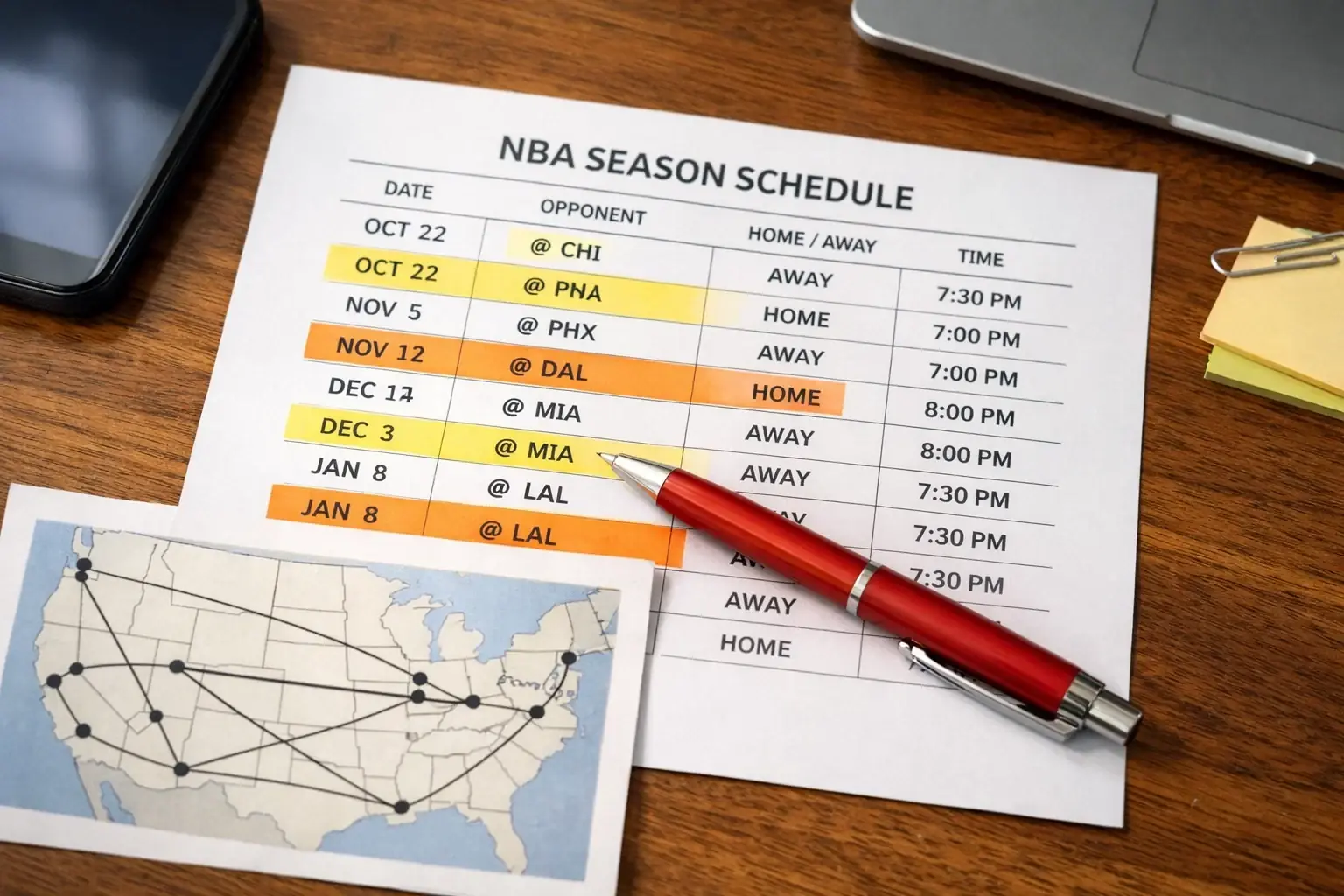
Travel amplifies schedule effects. A West Coast team flying to the East Coast for an early game faces circadian disadvantage. Teams ending long road trips often show fatigue even without back-to-back games. The four-in-five-nights scenario, common during the regular season, punishes teams that cannot maintain depth. Tracking travel miles and rest days reveals hidden edges the casual bettor overlooks.
Rest advantages also cut the other direction. A team sitting at home for three days while their opponent flew across the country holds meaningful edge. The 2025-2026 season schedule includes several stretches where contending teams face brutal travel while opponents enjoy extended rest. Mapping these mismatches before the season identifies profitable betting opportunities months in advance.
Injury Reports and Lineup Changes
No single factor moves NBA lines more dramatically than injuries to star players. When a top-ten player sits, the spread adjusts three to five points or more depending on team depth. These adjustments seem straightforward until you consider how the market actually processes injury news.
Early injury reports often carry uncertainty. A player listed as questionable might play limited minutes, full minutes, or sit entirely. The market cannot price this uncertainty perfectly, creating opportunities for bettors who monitor practice reports and beat reporters. Official inactive announcements arrive 30 minutes before tip-off, meaning late scratches move lines rapidly with little time to react. Bettors watching injury news live can sometimes beat the market on line adjustments.
Beyond stars, rotation player injuries matter in specific contexts. A team missing its primary rim protector will struggle against opponents who attack the paint. A missing perimeter defender shifts matchups throughout the lineup. These secondary injuries do not move lines dramatically, but they influence game flow in ways you can exploit through totals and props.
Home Court Advantage
NBA home court advantage has diminished over recent decades but remains significant. Home teams win approximately 54-55% of regular season games and cover spreads at a similar rate. This advantage reflects several factors: familiar shooting backgrounds, supportive crowd noise, favorable whistle tendencies, and absence of travel fatigue.
Oddsmakers bake home court into their lines, typically adding 2 to 3 points for the home team. The question for bettors is whether this adjustment accurately captures the true home edge for specific teams. Some franchises play significantly better at home than the standard adjustment suggests. Denver at altitude, Utah with its raucous crowd, and Miami with its late-night atmosphere provide examples of home court advantages that exceed league average.
The playoffs amplify home court dynamics. Crowds grow louder, players feed off energy, and pressure intensifies. Home court in a playoff series proves more valuable than during the regular season. Bettors who understand which teams thrive at home during high-stakes games gain edge in postseason markets.
Matchup Analysis and Playing Styles
Basketball is fundamentally about matchups. A dominant interior scorer facing a team without rim protection will produce different results than the same player against a defensive center. A three-point-heavy offense meeting a perimeter-focused defense creates different game dynamics than two teams that play through the post. Understanding these interactions separates sophisticated bettors from those who rely solely on records and rankings.
Pace interaction deserves particular attention. When two fast-paced teams meet, possessions increase and total points typically rise. When a slow team faces a fast team, the game usually settles somewhere in between based on which team controls tempo. Defensive teams often slow games down by design, limiting opponent possessions regardless of the other team’s preferred pace. Predicting pace helps with totals betting and with understanding how games might unfold.
Defensive schemes also create specific mismatches. Teams that switch everything defensively neutralize teams relying on pick-and-roll actions. Zone defenses can confuse offenses built around isolation scorers. Man-to-man principles work better against motion offenses. Identifying these schematic matchups requires watching games, not just reading box scores. The eye test matters when projecting how teams will perform against specific opponents.
Advanced Metrics
Traditional statistics tell an incomplete story. Points per game, rebounds per game, and shooting percentages capture outcomes without revealing underlying performance quality. Advanced metrics attempt to measure true efficiency, adjusting for pace, opponent quality, and contextual factors.
Offensive and defensive ratings measure points scored and allowed per 100 possessions, normalizing for pace differences. Net rating, the difference between these two, provides a single number capturing overall team quality. These metrics fluctuate during small sample sizes early in the season but stabilize as games accumulate. Comparing a team’s current net rating to their recent history reveals whether they are overperforming or underperforming relative to their true talent level.
True shooting percentage accounts for the differing values of two-point shots, three-point shots, and free throws. A player shooting 45% on twos and 35% on threes is less efficient than one shooting 50% on twos and 32% on threes, even if raw percentages suggest otherwise. For player props, understanding efficiency metrics helps predict scoring output more accurately than simple averages.
Player-level advanced metrics like Box Plus-Minus and Win Shares estimate individual contributions to team success. When a high-impact player sits, these metrics help quantify the expected drop in team performance. Replacements rarely match the production of starters, and the gap varies dramatically based on roster depth. Using these metrics informs injury-related spread analysis beyond simple point adjustments.
NBA Betting Strategies That Work
ATS Trending Analysis
Against the spread records reveal patterns that raw win-loss records hide. A team might be 15-10 straight up but 11-14 against the spread, meaning oddsmakers have consistently overvalued them. Conversely, a struggling team with a losing record might cover spreads regularly because the public dismisses them. ATS analysis identifies these perception gaps.
Situational ATS splits provide even more insight. How does a team perform ATS at home versus on the road? As favorites versus underdogs? After wins versus after losses? On rest versus back-to-back? Breaking down records by situation reveals tendencies that aggregate numbers obscure. A team covering 60% of spreads as a home underdog offers a clear betting angle, even if their overall ATS record sits at 50%.
Historical patterns tend to persist because they reflect underlying factors the market underweights. Teams with elite defenses but middling offenses often get undervalued because casual bettors focus on scoring. Young teams early in the season often fail to cover as the market prices in last year’s performance rather than current improvement. Finding these systematic mispricings creates repeatable edges.
Live Betting Opportunities
Live betting opens a parallel market where lines adjust based on game flow. A team down 15 points at halftime sees their odds balloon, sometimes dramatically. But NBA games feature runs. A 15-point deficit can evaporate in five minutes of hot shooting. Bettors who understand game dynamics can find value in live markets that pre-game analysis misses.
The key to live betting is recognizing when current score does not reflect true game state. A team missing open shots will eventually regress to their normal efficiency. A team hitting circus shots will cool down. Foul trouble for key players temporarily skews performance in ways that will normalize. Timeouts, adjustments, and momentum swings happen constantly. Live odds often overreact to recent events, creating windows of value.
However, live betting also carries risks. Lines move rapidly, requiring quick decisions that increase emotional betting. The pace leaves little time for careful analysis. Some bettors find live betting addictive in unhealthy ways. Use live markets strategically for specific situations rather than as continuous gambling throughout every game. Discipline matters even more than in pre-game betting.
Prop Betting Strategy
Player props offer the highest potential for finding mispriced lines. Sportsbooks set hundreds of prop markets every night, and their models cannot perfectly capture every variable affecting individual performance. Bettors who specialize in specific players or specific prop types can develop informational edges.
Focus beats breadth in prop betting. Rather than betting every prop that looks interesting, develop deep expertise in particular areas. Maybe you track assist props and understand which matchups inflate passing opportunities. Maybe you focus on rebounds and recognize when coaching changes or opponent weaknesses create over opportunities. Specialists outperform generalists because concentrated knowledge produces better probability estimates.
Line movement on props often signals sharp action just as it does on spreads. When a points prop opens at 22.5 and quickly moves to 24.5, significant money clearly hit the over. Following that movement early captures value before the line adjusts fully. Prop markets tend to be less efficient than game lines because lower betting limits make them less attractive to large sharp syndicates. This inefficiency creates opportunities for patient retail bettors.
Bankroll Management
No betting strategy survives poor bankroll management. The math is unforgiving: even a 55% win rate faces losing streaks that can wipe out undercapitalized bettors. Proper bankroll management ensures you survive variance long enough for your edge to manifest.
The standard recommendation is risking 1-5% of your bankroll on any single bet. Conservative bettors stick to 1-2% for standard plays, reserving larger sizes for extremely high-confidence situations. Even at 5% per bet, a ten-game losing streak, entirely possible even for winning bettors, costs half your bankroll. Sizing appropriately protects against catastrophic drawdowns.
Flat betting, where you wager the same amount on every play, provides simplicity and emotional stability. Variable sizing based on confidence seems appealing but tends to backfire because bettors overestimate their ability to identify strong spots. Most successful bettors keep position sizes remarkably consistent, letting their edge compound over time rather than trying to maximize individual outcomes.
Chasing losses remains the most common and destructive mistake. After a bad day, the temptation to increase bet sizes to recover feels overwhelming. This approach transforms manageable losing streaks into bankroll-ending disasters. Set daily or weekly loss limits and honor them absolutely. Walking away after reaching a limit demonstrates the discipline that separates long-term winners from recreational losers.

Parlays and Same Game Parlays
How NBA Parlays Work
Parlays combine multiple bets into a single wager, multiplying odds for larger potential payouts. A two-team parlay at standard -110 odds pays roughly 2.6-to-1 instead of the 0.91-to-1 from individual bets. The catch: every leg must win for the parlay to cash. One loss, and the entire ticket is worthless.
The mathematical reality of parlays favors the house. Each additional leg multiplies both potential payout and the house edge. A three-team parlay at true odds would pay about 7-to-1, but sportsbooks typically pay around 6-to-1. This gap represents the additional vigorish extracted from parlay bettors. The more legs you add, the worse your expected value becomes.
This does not mean parlays are never worth taking. Small parlays of two or three legs with correlated outcomes can offer reasonable value, especially when the correlation is not fully priced into the parlay odds. The key is understanding that parlays are higher variance plays requiring more discipline and smaller position sizes.
Same Game Parlay Strategy
Same game parlays combine multiple bets from a single game, such as a spread, total, and player prop. Sportsbooks introduced SGPs because they are enormously profitable. The correlation between legs, where one outcome influences another, is not fully reflected in payouts. A team covering a large spread likely saw their star player exceed statistical props, but the SGP does not pay as if those outcomes were linked.
Despite the house edge, SGPs attract bettors because they create engagement throughout games. Every basket potentially affects multiple legs of your ticket. This entertainment value has legitimate worth if you size SGPs appropriately and treat them as fun rather than as core betting strategy.
Finding value in SGPs requires identifying correlations the sportsbook algorithm underprices. If you believe a specific player will dominate and carry his team to a cover, combining his points over with the team spread creates a correlated parlay. The sportsbook adjusts for some correlation, but their models are imperfect. Bettors who understand game flow better than algorithms can occasionally find positive expected value SGP combinations.
Risk Management in Parlay Betting
Position sizing for parlays must be dramatically smaller than for straight bets. A bet that hits less than half as often as a straight wager should receive less than half the stake. Many bettors treat parlays as lottery tickets, risking small amounts for big potential payouts. This approach provides entertainment but rarely generates sustainable profits.
Hedging becomes relevant when parlays near completion. If you have a three-leg parlay with two legs already won, betting against the final leg locks in guaranteed profit regardless of outcome. The tradeoff is accepting smaller certain profit versus larger potential profit. Hedging decisions depend on the specific odds and your personal risk tolerance.
Some bettors use parlays strategically to increase potential payouts on high-confidence days. Rather than betting three separate games at -110 each, they combine into a parlay at approximately 6-to-1. The risk increases substantially, but so does the payout if all three hit. This approach makes mathematical sense only if your edge on each leg exceeds the additional vigorish parlays extract.
NBA Futures Betting
Championship and Conference Odds
Championship futures capture the drama of an entire season in a single bet. Odds shift dramatically based on trades, injuries, and on-court performance. The best value typically appears before the season starts or during dips when strong teams face adversity the market overreacts to.
Conference futures offer shorter odds and lower variance than championship bets. Backing a team to win the Western Conference requires them to survive only one bracket rather than the entire playoff field. Teams that project to reach the Finals but might lose there sometimes offer better value on conference lines than championship futures.
MVP and Award Betting
MVP betting rewards attention to narrative as much as performance. Voters favor compelling storylines: a best player on the best team, a dramatic improvement, or a return from adversity. Pure statistical dominance matters less than the combination of numbers, team success, and voter appeal.
Early MVP odds before the season often undervalue players on projected top teams. Once a player emerges as a frontrunner mid-season, value evaporates. The best MVP bets typically come before games begin or when injury or poor team performance temporarily deflates a contender’s odds.
Season Win Totals
Win totals set before the season invite season-long sweating. Bettors analyze rosters, schedules, and coaching changes to project regular season records. The market typically prices teams reasonably close to true expectations, but outliers exist every year.
Teams with significant roster turnover are hardest to price. New additions and subtractions take time to integrate, creating early season volatility. Young teams on the rise and aging teams heading for decline often see win totals that lag reality by several games.
Tools and Resources for NBA Bettors
Successful betting requires infrastructure beyond gut feelings. Odds comparison sites like OddsChecker and The Action Network aggregate lines across sportsbooks, making line shopping fast. Statistical databases including Basketball Reference and NBA.com provide the numbers underlying informed analysis. Injury tracking through team beat reporters and aggregators like Rotoworld ensures you never miss important availability news.
Bankroll tracking applications help maintain discipline. Recording every bet with stake, odds, and outcome reveals patterns in your own behavior. Maybe you perform worse on afternoon games. Maybe you overbet favorites. Data about your own betting exposes weaknesses you can address.
Model-building tools range from simple spreadsheets to sophisticated programming environments. Even a basic model that combines a few key factors often outperforms pure intuition. You do not need machine learning to gain edge; systematic thinking implemented consistently beats sporadic brilliance.

FAQ
What is the best type of bet for NBA beginners?
Moneylines on games between closely matched teams offer the simplest entry point. You only need to pick the winner, and competitive games avoid the extreme juice that heavy favorites carry. As you develop understanding, adding spread and totals bets expands your options without dramatically increasing complexity. Avoid parlays and props until you have established consistent straight bet results.
How do you find value in NBA betting odds?
Value exists when your estimated probability exceeds the implied probability from odds. Convert odds to percentages, then compare against your own analysis. Track your predictions over time to test whether your probabilities actually calibrate correctly. Line shop across multiple sportsbooks to capture the best available numbers. Focus on situations where the market historically misprices, such as road underdogs or teams on extended rest.
What key factors should you analyze before placing NBA bets?
Rest and schedule advantages predict performance better than most statistics. Check injury reports for both teams, including non-star rotation players whose absence affects specific matchups. Evaluate pace and style compatibility to project game flow. Review recent ATS trends to identify how the market has priced each team. Finally, compare your conclusion against the betting line to determine whether value exists.
Conclusion
The best bet for any NBA game depends entirely on the specific circumstances. No universal answer exists because markets adjust and situations differ. What works tonight might fail tomorrow. The approach outlined here, understanding fundamentals, analyzing relevant factors, managing bankroll, and identifying value, provides a framework for making smarter decisions consistently.
Betting basketball profitably requires treating it as a skill to develop rather than entertainment to enjoy. The learning curve extends across seasons. Mistakes teach more than wins. Tracking results honestly reveals whether you actually possess edge or merely experienced positive variance. Patience and discipline matter more than any individual pick.
The NBA offers more betting opportunities than bettors can possibly exploit. Focus on situations you understand well rather than spreading attention across every available market. Depth beats breadth. Consistency beats brilliance. Process beats outcomes over time.
Published by the Best bet for nba team.